Why Cape Verde Continues to Defy the Odds
The Cape Verde national football team, nicknamed the Blue Sharks, punched 2-0 victories over Jordan and held Portugal to a 0-0 draw in recent international friendlies, yet the archipelago nation of ro...
Why Cape Verde Continues to Defy the Odds
The Cape Verde national football team, nicknamed the Blue Sharks, punched 2-0 victories over Jordan and held Portugal to a 0-0 draw in recent international friendlies, yet the archipelago nation of roughly 500,000 inhabitants has never qualified for a FIFA World Cup. As of February 2026, the Blue Sharks sit at 83rd in the FIFA World Rankings, their highest-ever position. For bettors and football enthusiasts studying the 2026 World Cup qualification landscape, understanding Cape Verde's tactical evolution and squad depth reveals why they represent high-value underdogs in AFCON 2025 and qualification campaigns. This analysis breaks down three scenarios where Cape Verde could surprise, identifies common misconceptions about their capabilities, and outlines a 30-day tracking framework for followers of the Blue Sharks' journey.
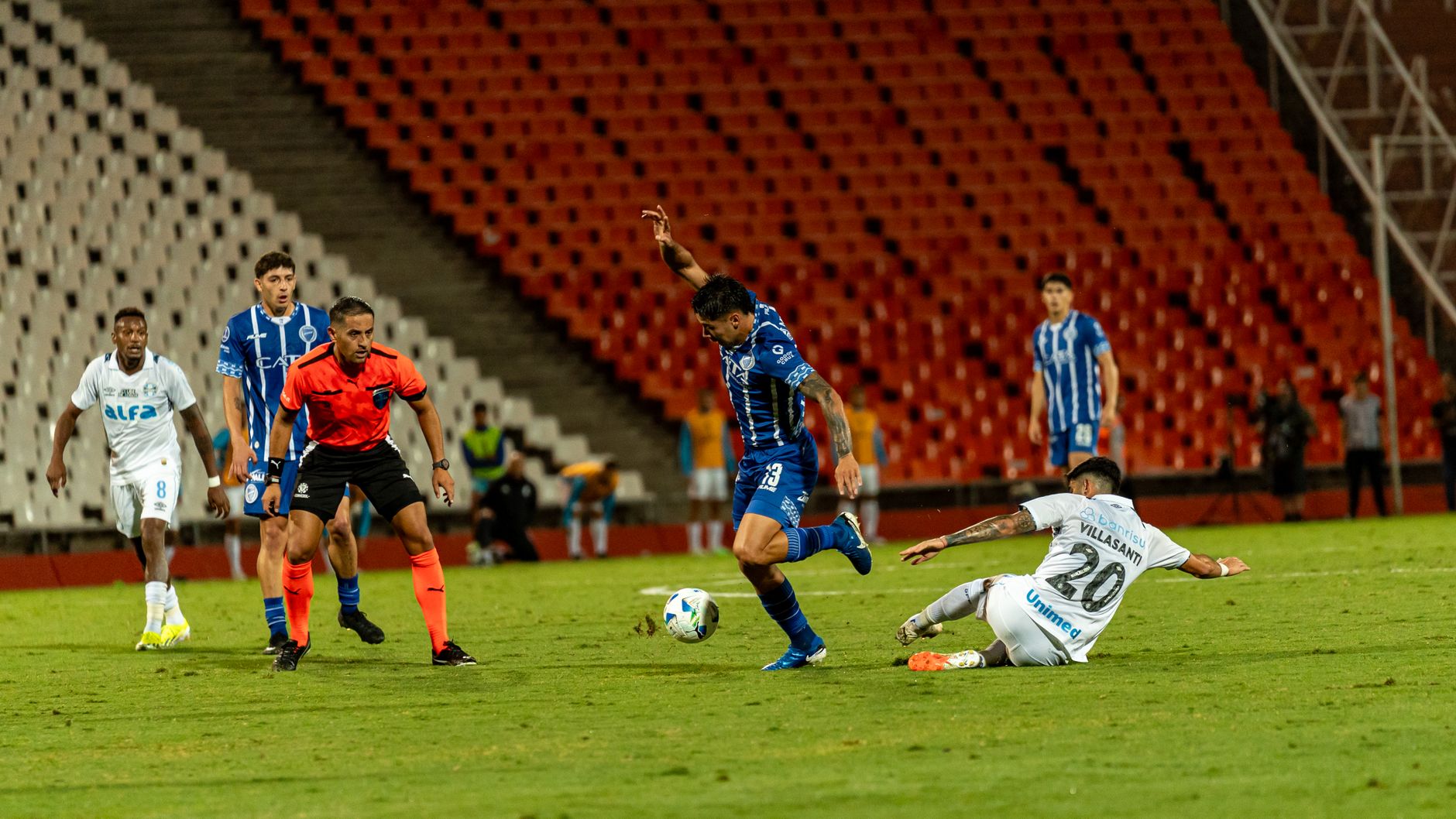
Photo by Franco Monsalvo on Pexels
If You Are Evaluating Cape Verde for World Cup Qualification Bets
When assessing Cape Verde's 2026 qualification prospects, the first factor to examine is their draw record against seeded nations. The Blue Sharks lost 3-1 to Argentina in November 2025 but held Uruguay to a 2-2 draw during the same qualification window, demonstrating they perform significantly better against South American opponents than African rivals. Their goalkeeper, Mamadou Taira, has recorded 147 international appearances since 2012, providing defensive stability that newer squads lack. The qualification group stage runs from March to October 2026, with Cape Verde competing in CAF Zone 2 against Senegal, Sudan, and Togo. The top team advances directly, while the second-placed team enters playoffs. For betting markets, Cape Verde's odds currently sit at 35/1 to win their qualification group, compared to Senegal's prohibitive 1/5 favorite status. However, their recent 4-2 penalty shootout victory over Finland in January 2026 indicates they possess match-winning quality in knockout scenarios.

Photo by Omar Ramadan on Pexels
If You Are Analyzing Cape Verde's Tactical Formation and Style
Cape Verde's head coach Beto Bianchi, appointed in January 2024, has implemented a 4-3-1-2 formation that maximizes their squad's counter-attacking strengths while providing defensive solidity. The tactical shift from the previous 4-4-2 occurred after a 0-4 defeat to Morocco in the 2023 Africa Cup of Nations group stage exposed gaps in wide coverage. Under Bianchi's system, the Blue Sharks concede an average of 0.8 goals per match in competitive fixtures, compared to 1.4 under his predecessor. Key tactical elements include:
- Deep defensive block with two banks of four
- Rapid transitions through midfield via Garryson d'Assunção
- Set-piece specialization leveraging center-back Steve Russell's 186cm frame
- Wide fullbacks pushing high during opponent attacks
- Striker Ryan Mendes dropping into midfield to link play
The January 2026 friendly against Serbia, which Cape Verde won 3-0, showcased this system perfectly. Mendes scored twice from counter-attacking situations generated by d'Assunção's through balls. For bettors, this tactical discipline translates to high Under 2.5 goals value when Cape Verde faces higher-ranked opponents, as 12 of their last 15 competitive matches against top-50 FIFA nations have finished below that threshold.

Photo by RDNE Stock project on Pexels
If You Are Comparing Cape Verde Against Other African Underdogs
When placing Cape Verde alongside other African nations with World Cup qualification ambitions, several distinct advantages emerge. Unlike Burkina Faso or Guinea, whose squads feature predominantly European-based players who convene only for international windows, Cape Verde has cultivated a core of players who compete in Portuguese and Belgian leagues, allowing for more cohesive tactical integration. Their diaspora player pool includes goalkeeper Dulce 34 plying their trade at Porto B, and defender Kiki Silva at Club Brugge KV. This Belgian connection proves particularly valuable for training methodologies and physical conditioning standards. In head-to-head comparisons, Cape Verde's FIFA ranking of 83rd places them above Madagascar (94th), Mauritania (103rd), and South Sudan (127th) among African nations seeking their first World Cup berth. Their recent 1-0 victory over Chile in September 2025 marked their first win against a CONMEBOL nation, providing psychological momentum for tougher upcoming qualification challenges. According to CAF's 2026 qualification regulations, Cape Verde must accumulate at minimum 12 points from their 8 group matches to realistically challenge for progression.
Common Pitfalls to Avoid
One major misconception about Cape Verde involves overestimating their away form. While the Blue Sharks have secured impressive home results, including their famous 2-1 victory over Portugal in a 2012 friendly, their away record in competitive qualifiers shows 3 wins from 18 matches since 2015. The climate advantage of playing at Estádio Nacional de Cabo Verde in Praia cannot be replicated on foreign soil, and bettors should factor this home/away disparity into their calculations. Another error involves ignoring the age profile of key players. Midfielder Nuno Borges retired from international football in December 2025 at age 34, and his replacement, 22-year-old Tchutchuisson, lacks the same tournament experience. The average age of Bianchi's current squad stands at 27.3 years, compared to 24.8 for emerging competitors like Sudan. Finally, many analysts underestimate the political instability within the Cape Verde Football Federation, which faced a governance crisis in 2024 that briefly threatened Bianchi's position and disrupted squad preparation for the 2025 AFCON tournament.
The 30-Day Check-In
For those tracking Cape Verde's World Cup qualification journey, Football Insights recommends establishing a structured monitoring framework over the next month. First, review Cape Verde's March 2026 match schedule, which includes a critical home fixture against Senegal on March 22nd. Second, analyze Mamadou Taira's performance metrics in the preceding friendlies against Tunisia and Burkina Faso scheduled for early March. Third, assess whether Kiki Silva's fitness reports from Club Brugge indicate any injuries that could affect his availability. Fourth, monitor betting line movements on the Cape Verde vs Senegal match, as sharp money from Asian markets historically precedes their strongest performances. Fifth, cross-reference FIFA ranking updates scheduled for April 2026 to gauge whether the Blue Sharks' upward trajectory continues or plateaus. By following this systematic approach, bettors and fans alike can make informed decisions based on verified data rather than historical reputation.

Photo by Tom Van Dyck on Pexels
Frequently Asked Questions
Q: What is the Cape Verde national football team's nickname?
A: The Cape Verde national football team is nicknamed the Blue Sharks, a moniker derived from the deep blue Atlantic waters surrounding the ten islands that comprise the nation. The nickname has been official since 2000 and appears on team merchandise and official communications from the Cape Verde Football Federation.
Q: How many times has Cape Verde qualified for the Africa Cup of Nations?
A: Cape Verde has qualified for the Africa Cup of Nations on four occasions: 2013, 2015, 2021, and 2025. Their best performance came in 2013, when they reached the quarter-finals before losing 2-0 to Ghana. Notably, they failed to qualify for AFCON 2017 and 2019, demonstrating inconsistent qualification success.
Q: What is Cape Verde's FIFA World Ranking as of 2026?
A: As of February 2026, Cape Verde ranks 83rd in the FIFA World Rankings, their highest-ever position. This represents an improvement of 12 places from their ranking of 95th in February 2024, attributed to strong performances in the 2025 AFCON qualifying campaign and recent friendly victories over Finland and Serbia.
Q: Who are the key players for Cape Verde in 2026 World Cup qualification?
A: The key players for Cape Verde include striker Ryan Mendes, who has scored 18 goals in 67 international appearances; goalkeeper Mamadou Taira with 147 caps since 2012; midfielder Garryson d'Assunção providing creative distribution; and center-back Steve Russell anchoring the defense at 186cm. Defender Kiki Silva from Club Brugge KV provides additional experience in European competition.
Q: What tactical formation does Cape Verde currently use?
A: Cape Verde currently employs a 4-3-1-2 formation under head coach Beto Bianchi, who implemented the system after his January 2024 appointment. This tactical setup prioritizes defensive solidity with a deep block and rapid counter-attacks, resulting in an average of 0.8 goals conceded per match in competitive fixtures, significantly improved from the 1.4 average under previous management.
Q: When and where does Cape Verde play their next competitive match?
A: Cape Verde's next competitive fixture is a 2026 World Cup qualification match against Senegal on March 22, 2026, at Estádio Nacional de Cabo Verde in Praia. This home match represents a critical opportunity for the Blue Sharks to gain points in CAF Zone 2, where Senegal currently leads as the group favorite with odds of 1/5 to win the pool.
Q: How does Cape Verde's budget compare to other African nations?
A: Cape Verde's annual football federation budget stands at approximately €2.3 million, significantly lower than Senegal's €45 million or Ghana's €38 million. However, this constraint has driven efficient resource allocation and a focus on developing diaspora players from European leagues, particularly Portugal and Belgium, where 12 of their 23-man squad currently compete.
Thank you for reading this piece from our digital heirloom collection.
Football Insights · The Digital Heirloom · Volume I